
Mapping of river breakages for flood preparedness in Somalia
Floods remain one of the most devastating hazards in Somalia, causing widespread destruction of lives and livelihoods, while also displacing thousands of families each year. The country’s two main rivers (Juba and Shabelle rivers) are vital lifelines that support fishing, farming and water resources for millions of Somali people. However, the same rivers pose a serious risk when their banks are damaged.
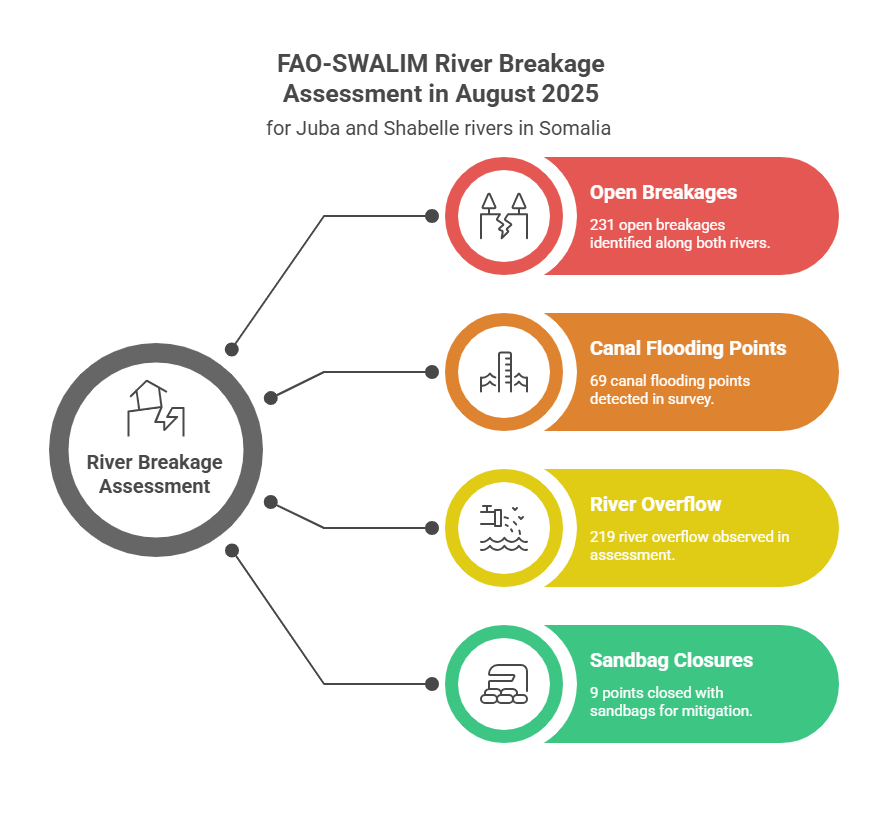
In August 2025, River breakage assessment conducted by FAO SWALIM has highlighted the extent of these challenges. The assessment, which involved satellite imagery analysis, identified critical weak points along both the rivers.
In Juba River, 105 open breakages, 14 canal flooding points, 31 river overflow and 2 points closed with sandbags were identified, while along the Shabelle River 126 open breakages, 55 canal flooding points, 188 river overflow and 7 places closed with sandbags were identified.
The assessment recorded over 500 vulnerabilities along the two rivers, posing a significant risk to communities and their crops in flood prone areas.
The impact of these findings is far-reaching, this include:
• Breakages can cause flooding to farmland, destroy crops, reduce food production and threaten household incomes
• Thousands of people are displaced from their homes every year when due to river floods
• River floods increase the spread of waterborne diseases such as cholera and malaria.
• Floods from the breakages can damage infrastructures such as buildings, roads, schools and health centers limiting access to essential services.
Monitoring river breakages is lifesaving for communities at risk. By precisely identifying the locations of weak points along the two rivers, government institutions, humanitarian agencies and local communities are equipped with the knowledge they need to act before disaster strikes. Timely interventions can significantly reduce the risk of floods and their devastating impacts.
This work underscores the need for strong collaboration between the federal and state governments of Somalia, community leaders and humanitarian partners. Addressing those weak points requires coordination, sufficient resources and community engagement. Early actions are more cost effective than post disaster response and can save lives and secure livelihoods.
FAO SWALIM will continue to provide reliable and timely data to support the efforts of reducing risks and building resilience across Somalia. Working together and making proactive actions can make it possible to turn information into protection and safeguard the future of vulnerable communities.